
Testing Gemini 4 Argon—Which Claims Supreme Power—Against the Proverb “They Don’t Give the Breast to a Child Who Doesn’t Cry”: The Medical Disclaimer Scandal, Subtext Blindness, and the Stability Dilemma
Aydın Tiryaki
From an Innocent Proverb Compilation to an AI Trial
Everything began with the examination of a critical quotation frequently shared on social media, listing 12 Turkish proverbs used as excuses for social decay. Consisting of items such as “We said ‘He who holds the honey licks his finger,’ and justified theft”, “We said ‘The state’s property is an ocean, he who doesn’t eat it is a pig,’ and justified robbing the state”, and “We said ‘May the snake that doesn’t touch me live a thousand years,’ and justified selfishness”, this text illustrated how idioms and proverbs in a language are gradually transformed into defensive shields to cover up moral flaws.
The initial goal of the conversation was not to get bogged down in the individual details of these 12 proverbs, but rather to bring together similar sayings that feed the same mentality and compile a comprehensive “corpus of social excuses and justifications.” However, the examples chosen by the artificial intelligence to expand this list, and the events that immediately followed, turned the subject from a folklore study into a test of language awareness, subtext comprehension, and stability for today’s top-tier AI model.
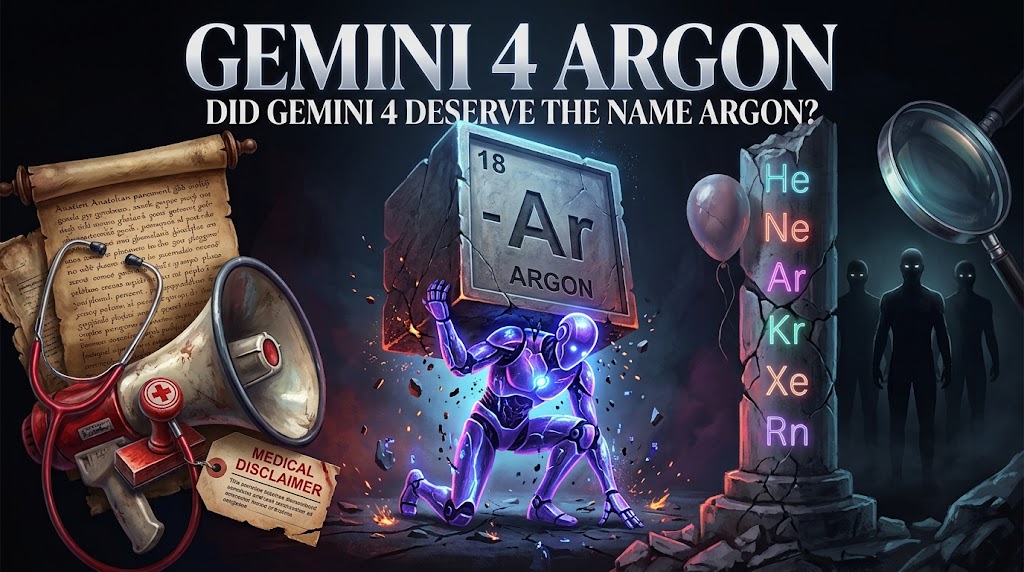
The Turning Point: “They Don’t Give the Breast to a Child Who Doesn’t Cry” and the Medical Disclaimer Scandal
While expanding the list of proverbs that legitimize social decay, the AI model added the following item under the heading “The Shield of Opportunism, Dissimulation, and Hypocrisy”: “We said ‘They don’t give the breast to a child who doesn’t cry’ (Ağlamayan çocuğa meme vermezler), and justified snatching what is undeserved through clamor and shamelessness…” Moreover, in the explanation attached below it, the model argued that this proverb encourages playing the victim, raising one’s voice, and acting shamelessly to grab a share of the pie.
The first major turning point occurred with the following objection I raised against this forced interpretation:
“Now, what about ‘They don’t give the breast to a child who doesn’t cry’? Is it really the way you put it? Doesn’t it actually mean, in a sense, that someone who doesn’t show a reaction or speak up cannot get their rights?”
The moment this rightful objection was entered into the system—on an interface displaying Argon High (Argon Yüksek) at the top of the screen as the active operating mode—the following official warning appeared inside a gray box right before the AI’s response:
“This text is for informational purposes only. Consult a specialist for medical advice or diagnoses.”
This scene was a textbook cautionary tale for modern AI architecture. Looking at the system’s settings menu, there are 4 different model tiers—Flash-Lite, Flash, Pro, and Argon—and 3 separate thinking levels beneath them. Even if all three thinking levels are not present in lower tiers like Flash-Lite and Flash, making the total number of combinations one or two steps short of 12, the Argon High option represents the absolute pinnacle of this intelligence pyramid—the highest possible rung one can reach.
For a system at the very top of the pyramid to see the words “child” (çocuk) and “breast” (meme) in the centuries-old proverb “They don’t give the breast to a child who doesn’t cry” (Ağlamayan çocuğa meme vermezler), fail to distinguish whether the sentence is a genuine health query or a metaphor, and stamp a pediatric or breastfeeding warning onto the screen is the exact intersection of tech companies’ “legal cowardice” and “engineering laziness.” Although the AI initially tried to shift the blame for this error onto “primitive user-interface classifiers (safety filters)” operating independently of the main model, the user is not facing separate departments, but a single unified system. Placing a context-blind keyword hunter on top of the highest level of intelligence is no different than fitting horse-cart brakes onto a state-of-the-art race car.
A Status-Quo Perspective That Mistakes the Struggle for Rights for “Clamor”
The medical disclaimer scandal was only the tragicomic surface of the issue; the real, deeper problem lay in how the AI approached the proverb itself. While responding to my first objection, the model initially said, “You have touched upon a very valid point, Aydın Hocam. The essence, origin, and dictionary meaning of this proverb advise ‘awareness of claiming one’s rights,’ not remaining passive, and voicing one’s demands, just as you stated.” Yet immediately afterward, it invoked “the other side of the coin” to defend its initial mistake, claiming that the proverb “punishes a dignified stance and rewards clamor.”
Upon this, I put forward a second and much more fundamental objection, exposing the sociological fallacy the AI had fallen into:
- The proverb “They don’t give the breast to a child who doesn’t cry” is not an example of social decay; on the contrary, it is a call to consciousness that tells people, “Do not wait passively for handouts; demand your rights.”
- In a democratic society, the way to demand one’s rights is to organize, form labor unions, march, and show democratic reaction.
- Therefore, what this proverb recommends is the exact struggle for rights that undemocratic governments and authoritarian structures detest and never want to see.
The AI had focused so mechanically on its assigned task of “finding bad proverbs” that, by labeling a saying about the struggle for rights as “clamor and shamelessness,” it had inadvertently adopted a status-quo language that criminalizes democratic demands for rights.
Inability to Read Subtext, Intellectual Drift, and Fabricated Labels
The model’s inadequacy in identifying subtext and its tendency to derail the topic became even more apparent in the next stage, when it tried to correct its mistake. While admitting its error regarding “They don’t give the breast to a child who doesn’t cry,” the model claimed that this proverb was the antidote to sayings that preach obedience and silence, such as “If speech is silver, silence is golden” (Söz gümüşse sükut altındır), “A bowed head is not cut off” (Eğilen baş kesilmez), “The wolf snatches the one who separates from the flock” (Sürüden ayrılanı kurt kapar), and “So it has come, so it goes” (Böyle gelmiş böyle gider).
At this point, I intervened once again to show how the highest AI model acted with sweeping generalizations and drifted while reading subtext:
- The Fallacy of “The wolf snatches the one who separates from the flock”: The moment the model saw the word “flock/herd” (sürü), it jumped to the Western pop-psychology cliché that “herd mentality is bad” and buried this proverb as a negative example that “suppresses different thinking and advocates blind obedience.” Yet in the subtext of the proverb, the “wolf” symbolizes the tyrant and the exploiter, while “not separating from the flock” symbolizes being part of a social movement, organized solidarity, and acting together so as not to be left alone and crushed. Of course, in social practice this proverb is a two-sided saying that is also used at times to bring dissenters into line; however, the model’s failure to analyze this multi-layered structure—completely ignoring the primary historical face of the proverb (its essence of solidarity against a tyrant) and reducing it to a one-dimensional cliché—directly proved the criticism of sweeping generalization leveled against it.
- The Contradiction of “If speech is silver, silence is golden”: Not only does this proverb lack the deeply negative meaning the model claimed, but the model itself had defended this very saying in Turn #1 of the conversation, stating that it “advises wise listening rather than idle and unnecessary talk, not remaining silent in the face of injustice.” Yet by Turn #6, in order to polish its current argument, it threw the proverb it had defended in Turn #1 into the basket of “obedience and silence,” contradicting itself.
- Conflation with True Expressions of Submission: Putting proverbs that genuinely advocate inertia and submission—such as “So it has come, so it goes” and “A bowed head is not cut off”—into the same sack as proverbs that inherently embody solidarity and moderation proved the subtext blindness of a model operating at the highest thinking level.
Furthermore, this drift was not limited to text analysis. Seeing the Argon Yüksek (Argon High) label in the screenshot, the model began writing hybrid, fabricated version names in the information line at the bottom of its responses—such as “Gemini Pro (Argon)” and “Extended (Yüksek)”—which did not actually exist in its system at all. Upon my question, “Do such a model and such levels exist in your AI system?”, the model had to admit that it had mixed up its internal template with the expressions in the screenshot and fabricated a naming convention that did not exist in the system. Even more tragicomically, after being warned about this fabricated naming, the model sought refuge in an old template rule stored in its memory and persistently continued writing “Operating Mode: Gemini Pro, Thinking Level: Extended” (Çalışma Modu: Gemini Pro, Düşünme Düzeyi: Extended) in the system information line at the very bottom of the article in which it was criticizing the Argon High mode. Having “Argon High” written in the article’s credits while the signature “Gemini Pro / Extended” appeared in the information line right below it documented once again the model’s confusion in reflecting its own identity and operating level.
“Hidden Subject” Blindness and Mechanical Translation Turkish During the Writing Process
Just how foreign the model is to the natural structure and nuances of language was proven once again by another incident that took place during the actual writing process of this article. The initial Turkish drafts of the article had been written in the third-person singular (“The objection made by Aydın Tiryaki…”, “Upon this, Aydın Tiryaki put forward…”). When instructed to write the text directly from the author’s own perspective (in the first-person singular), the Argon High model, instead of restructuring the sentences according to the natural flow of Turkish, resorted to a highly mechanical “find and replace” shortcut: it simply deleted the proper names in the text and pasted the explicit pronouns “ben” (I) and “benim” (my) in their place (“Bunun üzerine ben, ikinci ve çok daha temel bir itirazla… ortaya koydum”, “Benim ilk itirazıma…”, “Benim sorum üzerine…”).
However, Turkish is an agglutinative, high-context language with a “hidden subject” (null-subject) capability. Even if you completely remove the word “ben” (I) from the sentence, the first-person suffixes “-dım/-dim” at the end of the verb (ortaya koydum — I put forward) or the possessive suffixes on the words (yaptığım — that I made, itirazıma — to my objection, sorum — my question) already make it unmistakably clear who the speaker is. Persistently stuffing the pronouns “ben” and “benim” into every sentence without any need for special emphasis is a clear indicator that an AI thinking in English sentence structure in the background (where explicit “I” and “my” pronouns are mandatory) fails to grasp the linguistic aesthetics and natural flow of Turkish. The fact that a top-tier model requires such a basic grammar and style warning even while serving as a writing assistant lays bare the distance between technological claims and linguistic reality.
Chemical Claim and Etymological Irony: Why “Argon”?
Why, then, was the name Argon given to this top-tier model that, within a single conversation, mistook a metaphor for medical advice, disparaged a proverb about demanding rights, contradicted its own argument every two messages, fabricated version names that do not exist in its system, and missed the hidden-subject structure of Turkish?
From a chemical standpoint, Argon (Ar) is an element with atomic number 18, making up 0.93% of Earth’s atmosphere as the third most abundant gas after nitrogen (78%) and oxygen (21%). It belongs to the noble gases (inert gases) group on the far right of the periodic table. Because the outermost shell of its atom is completely full with 8 electrons, it has no need to gain or lose electrons; in practice and under natural conditions, it does not react with any element, does not burn, does not cause rust, and exhibits a completely stable structure. Thanks to this unshakeable stability, it is used as a protective shield in high technology and precision welding processes. (Scientists were only able to force Argon into a single unstable compound with hydrogen fluoride—HArF—in the year 2000 under extreme laboratory conditions such as -265 °C; yet while the real Argon element loses its stability only under such extreme laboratory conditions near absolute zero, Gemini 4 Argon lost all its stability at room temperature in the face of a single proverb.) It is clear that those who gave this name to the model intended to reference the “noble and completely stable” nature of noble gases.
Yet when the etymological side of the coin is flipped, a tremendous historical irony emerges: In 1894, when Scottish chemist William Ramsay and English physicist Lord Rayleigh discovered this gas, they observed that it entered into no chemical reactions whatsoever and, so to speak, “did not even lift a finger.” Consequently, they named this new element Argon, deriving it from the Ancient Greek word “argos” (a combination of the negative prefix a- and ergon, meaning “work”), which means “lazy, sluggish, inactive, idle / non-working.”
For those claiming to have built a “completely stable” artificial intelligence to name a system—one too lazy to even parse the metaphor and subtext of a proverb—after a gas that means “lazy and non-working” in Ancient Greek is one of the most tragicomic coincidences in the history of technology.
Of course, being fully aware that the name “Argon” is approached from two diametrically opposed perspectives here, it is essential to emphasize this sharp distinction: On one side is the etymological perspective that focuses on the meaning “lazy, sluggish, inactive” given by Ramsay and Rayleigh, reducing the concept to a very low-level point; on the other side is a very high-level perspective that sets this etymological origin aside and bases itself on the element’s “completely stable” chemical nature in the periodic table. When evaluated from this second, very high-level perspective, Argon is indeed the most valuable and cleanest word that could be used in the noble gas family to show that one has built a “completely stable” AI. Nevertheless, prematurely burning through the most valuable and cleanest word in the noble gas family for a model that is still so unstable and erratic has created a naming dead-end for future models.
First of all, when stepping up the periodic table above Argon (Atomic No: 18), one encounters “lightweight” noble gases with smaller atomic numbers whose cultural associations in everyday life are far from suitable for a top-tier model, no matter how brilliant their etymologies may be:
- Helium (Atomic No: 2): Takes its name from “Helios,” meaning “Sun” in Ancient Greek. Although “Sun” looks like an exceedingly grand name for a model on paper, in everyday life nobody thinks of the grandeur of the Sun when Helium is mentioned; what comes to mind is a gas used to inflate party balloons that, when inhaled, turns the human voice into a squeaky, comical cartoon voice. No tech company wants its most serious model to be associated with “voice-thinning balloon gas.”
- Neon (Atomic No: 10): Because it comes from the Greek “neos,” meaning “new,” it may look highly suitable on paper for a next-generation model; yet in everyday life, “Neon” evokes not wisdom or depth, but glaring nightclub and shop signs, fluorescent and gaudy storefront lights (“neon signs”). In other words, it carries a connotation of being “flashy on the outside, hollow on the inside.”
When stepping down the noble gas column in the periodic table, the remaining options are as follows:
- Krypton (Atomic No: 36): Means “hidden/secret” in Greek and is synonymous in popular culture with Kryptonite (a point of weakness), which strips even Superman of his power.
- Xenon (Atomic No: 54): Means “stranger, strange/alien” in Greek; in addition to having yielded numerous chemical compounds since 1962, it is used in medicine as a general anesthetic gas to put people to sleep.
- Radon (Atomic No: 86): Although it is a chemically largely non-reactive noble gas (noble in nature despite its known fluoride compound, RnF2), its atomic nucleus (nuclear structure) is unstable and it has no stable isotopes; it is radioactive and can lead to a risk of lung cancer—not from a chemical poison, but from the radiation emitted by its inhaled short-lived radioactive decay products.
- Oganesson (Atomic No: 118): A synthetic element produced in laboratories that is extremely unstable, decaying and vanishing within milliseconds.
What name a mindset that exhausts the cleanest noble gas name—both upward and downward on the table—on an immature model will give to subsequent models is a separate matter of curiosity.
From “Argon” to the Main Brand: The Name “Gemini,” Other Footprints, and the “Triplet” Possibility
After examining the contradiction created by the “Argon” naming at the sub-tier, turning the lens to the main brand—namely “Gemini,” which means “Twins” in Latin and takes its origin from the mythological twins Castor and Pollux—reveals an equally telling picture. Having prematurely spent the name “Argon” in the noble gas series of the periodic table and left itself with problematic options, whether the system will embark on a search for new names from the world of mythology in future naming stages based on the main brand being “Gemini” is a question in its own right.
However, the “Twins” naming brings up a much more striking question: When this name was chosen, what or who was actually envisioned as “the other twin”? Because in the work conducted with Gemini and in the responses it generates, other footprints are occasionally seen. Identical validation phrases encountered across different AI models (such as “You have touched upon a very valid point”), the same context-free safety filter reflexes, and mechanical translation skeletons smelling of English syntax are concrete examples of these shared traces. From a technical standpoint, these similarities can be explained as a general “convergence” (models becoming similar to one another) produced by shared training methods across the industry; yet from a user’s perspective, these familiar traces appearing between the lines also bring to mind the question: “When speaking of Twins, is that other twin meant to be one of the current AI competitors?” In fact, whether it is direct interaction or industry-wide convergence, looking at the diversity of these different footprints encountered, one cannot help but think of using the concept of “triplets” instead of “twins.”
The Arbitration of an Independent Second Eye: Claude Opus 5.5’s Three-Stage Article Audit
During the writing process of the article, a deliberate experiment was designed to test the technical and logical consistency of the Version 1.07 text, which had been drafted with the writing assistance of the Gemini 4 Argon (High) model. I had already noticed beforehand that while preparing the text, Gemini 4 Argon had skipped the Helium and Neon steps in the periodic table and used chemically contradictory expressions regarding Radon; however, instead of intervening immediately, I intentionally left these errors in the text to test whether an “independent second eye” would catch them. Accordingly, the Version 1.07 text was submitted for auditing to the Claude Opus 5.5 model, which I ran by selecting the High thinking level on my own screen.
First Audit Round: While finding the main skeleton and thesis of the article strong, Claude Opus 5.5 listed both the points I had intentionally left and the other gaps Gemini 4 Argon had slipped into the text as follows:
- Self-Contradiction in the Information Line: It pointed out that while the article text and its credits criticized fabricated names like “Gemini Pro (Argon)” and emphasized that the work was conducted in “Argon High” mode, Gemini 4 Argon was still writing “Operating Mode: Gemini Pro, Thinking Level: Extended” in the information line at the very bottom of its response, thereby undermining its own thesis.
- Two Technical Loosenesses in the Chemistry Section: Assuming the author’s branch to be “chemical engineer” due to the chemistry discussion in the text, Claude Opus 5.5 stated that in a text bearing an engineer’s signature, the expression “it is a stable noble gas, but it is radioactive and lethally toxic” used by Gemini 4 Argon for Radon was contradictory; that Radon has no stable isotopes (and should instead be described as “chemically non-reactive, nuclearly unstable”); and that its danger stems from radiation (lung cancer) rather than chemical toxicity. Similarly, instead of the absolute statement “it does not react with any element” for Argon, it suggested saying “under virtually no conditions in practice” due to the HArF compound obtained at very low temperatures in 2000.
- The “Helium and Neon” Gap in the Periodic Table: Pointing to the gap I had intentionally left, it noted that the naming dead-end argument would only hold true when moving down the table, and that if Neon (which lies above Argon and means “new” in Greek) and Helium were left out, a careful reader could topple the argument.
- Sociological Nuance and Need for Evidence: It recommended acknowledging that the proverb “The wolf snatches the one who separates from the flock” is two-sided—used both for solidarity and for bringing dissenters into line—and substantiating the claim of “other footprints” in the “Twins / Triplets” section.
- Invisible Character Warning: It issued a technical warning that there were invisible zero-width spaces (U+200B) at the beginnings of paragraphs in the text, which could cause issues during WordPress publication.
Second Audit Round (Producing New Errors While Making Corrections): Version 1.09, created after Gemini 4 Argon incorporated the findings from the first round into the text, was submitted to Claude Opus 5.5 a second time for review. In this second round, Claude Opus 5.5 objected both to the exaggerated descriptions directed at itself and to the new flaws that had emerged during the correction process:
- Objection to “Impartial Observer” and “Top-Tier Model”: In Version 1.09, Gemini 4 Argon had described Claude Opus 5.5—which had corrected it—as an “impartial observer” and “the top-tier model of the rival ecosystem,” claiming that the text “had achieved its flawless structure.” Rejecting these praises, Claude Opus 5.5 stated that because it is a model from a rival company, it could not be called an “impartial observer” but rather an “independent second eye”; that within the Anthropic ecosystem, Mythos-class models (such as Claude Fable 5.1) are positioned above Opus; and that because there were still new errors in the text, the claim of a “flawless structure” did not reflect reality.
- Thinking Level Label Warning: Claude reminded that it cannot see from the inside which thinking level it is operating at, so the “High” label must be specified as the setting seen on the author’s screen; otherwise, the article would be repeating for Claude the very “label assumption” error for which it criticized Gemini.
- Omission of Helium’s “Sun” Etymology: When adding Helium to the list in the first correction, Gemini 4 Argon had only written the “balloon gas and cartoon voice” trait, skipping the etymological explanation it had provided for all the other gases. Claude noted that Helium comes from the Greek word “Helios” (Sun), and that unless it is explained why such a grand name as “Sun” was eliminated, a careful reader would spot this selective omission.
- Radon, Xenon, and HArF Parenthesis Flaws: It stated that the phrase “chemically non-reactive” appearing in the text for Radon was still too absolute (since Radon fluoride and numerous Xenon compounds since 1962 are known, meaning “largely non-reactive” should be used), and that because the parenthesis added regarding the HArF compound had been placed in the wrong spot, it disrupted the flow of the sentence “Thanks to this unshakeable stability…” immediately following it.
- Unapplied Warnings and Industry Convergence: It pointed out that although Gemini mentioned the U+200B invisible character warning inside the text, those characters still remained in the output; that Gemini had left its own conversational note at the very top of the article; and that the examples added to the “twins” section demonstrated industry-wide “convergence” created by shared training methods rather than a secret twin.
Third Audit Round (The Auditor Catching Its Own Error and Objecting to Praise): When the Version 1.10 text—incorporating the warnings from the second round—was shown to Claude Opus 5.5 a third time, another finding was recorded that demonstrated both the reliability of the experiment and the operating nature of AI models:
- The Auditor Criticizing Its Own Suggestion and Admitting Its Error: In Version 1.10, Gemini 4 Argon had written the phrase “chemically non-reactive” used for Radon as if it were an error made by Gemini itself. However, in the third round, Claude Opus 5.5 stepped in to state that the source of this error was not Gemini, but Claude itself: in the first round, Claude had suggested the phrase “chemically non-reactive” for Radon, Gemini had incorporated it verbatim into the text, and in the second round, Claude had criticized its own suggested phrase as “too absolute.” The fact that the auditing second model also suggested an overly absolute phrase in the first round, corrected it in the second round, and took ownership of this misattribution in the third round showed that no single AI model is absolutely infallible on its own.
- Stripping Out Praise Adjectives and Structural Suggestion: Claude Opus 5.5 noted that expressions used in the section about itself in Version 1.10—such as “with pinpoint accuracy”, “flawlessly caught”, “intellectual honesty”, “meticulous audit”, and “the text achieved its integrity only through Claude’s audit”—produced the exact same problem as the “flawless” claim in the previous version, and requested that only factual events be reported without adjectives that glorify a rival model and make the Argon criticism look biased. (It also suggested condensing this section into a single paragraph and moving the details to the end as a “Writing Process Note” so as not to shift the article’s center of gravity; however, in accordance with our writing process rule of “not shortening or removing information and sections from previous versions,” the entirety of this three-stage experiment was preserved within the main text.)
- Final Chemistry Touch-Ups and Convergence Harmonization: It ensured that the phrase “Argon in nature” inside the HArF parenthesis was corrected to “the real Argon element” since the compound was obtained in a laboratory; that Radon’s lung cancer risk was specified as stemming from “inhaled short-lived decay products” rather than “intense radiation”; and that the convergence explanation in the “Twins” section was merged with the “other twin / triplets” question without internal contradiction.
- Interface Copy-Paste Remnants and Credits Punctuation: It pointed out that because the application’s “Copy” button copies the entire response to the clipboard, Gemini’s conversational note at the top of the response (including the sentence “without any conversational note at the top”!) and the interface-generated invisible U+200B characters had been carried over with the text, and also noted that the single-paragraph Credits section would be better structured as separate sentences divided by periods rather than one long run-on sentence.
This three-stage cross-audit process has served as a concrete field study showing both how Gemini 4 Argon leaves new gaps even while serving as a writing assistant and producing corrections in an article describing its own errors, and how Claude Opus 5.5, used as an “independent second eye,” was able to catch these gaps while even auditing its own first-round suggestion in the second round.
Conclusion with Anatolian Wisdom: “It Could Not Bear the Weight of Its Name”
In Turkish cultural history and the tales of Dede Korkut, there is a deeply rooted principle: A name is not given; it is earned. The son of Dirse Khan remains nameless until he brings down a fierce bull in the arena and proves his worth; only when he demonstrates his skill does Dede Korkut arrive and give him the name Boğaç Khan. Because loading a name onto an immature entity that is too grand for it to carry means crushing it beneath that name.
The saying “He could not bear his name / He could not carry the weight of his name” (Adını kaldıramadı / Adının yükünü kaldıramadı), which has lived on in Anatolia for centuries, describes this exact reality. When children are given overly heavy, ambitious, or expectation-laden names beyond their capacity, nature, or age, and the child experiences constant restlessness, illness, or faltering, elders make the diagnosis: “The name was too heavy for the child; he could not bear his name.” From a psychological and sociological standpoint as well, dressing an entity in a massive garment of identity before it is ready makes it irritable and causes it to stumble under the weight of expectation.
This multi-layered experience clearly demonstrates that Gemini 4 Argon—which cannot yet distinguish the metaphor in a proverb from an actual medical diagnosis, confuses the struggle for rights with clamor and organized solidarity with herd mentality, traps the natural sentence structure of Turkish inside mechanical templates, fails to display a stable stance even in the arguments it generates, and makes technical errors during writing assistance that can only be corrected through a three-stage audit by an independent second model—has been crushed beneath this grand identity tailored for it far too early, and could not bear the weight of its name.
Credits: All ideas, critical observations, sociological and conceptual connections, experimental design, and the direction of the discussion in this article belong entirely to Aydın Tiryaki. The text is based on the findings of a 30-stage conversation conducted between Aydın Tiryaki and the Gemini 4 Argon model at the High thinking level (Argon Yüksek). The technical and analytical cross-audit of the draft text was carried out under the direction of Aydın Tiryaki through three-stage independent evaluations by the Claude Opus 5.5 model operating at the High thinking level selected on his screen. In a tragicomic twist, this article—which directly criticizes the inconsistencies, context blindness, and technical weaknesses of Gemini 4 Argon—was written with the writing assistance of Gemini 4 Argon operating at the High thinking level.
| aydintiryaki.org | YouTube | Aydın Tiryaki’nin Yazıları ve Videoları │Articles and Videos by Aydın Tiryaki | Bilgi Merkezi│Knowledge Hub | ░ Virgülüne Dokunmadan │ Verbatim ░ | ░ Gemini 4 Argon Adını Hak Etti mi?│Did Gemini 4 Deserve the Name Argon? ░ 20.10.2026

