
Aydın Tiryaki (March 29, 2026)
What Is This Gem Designed For? (Purpose)
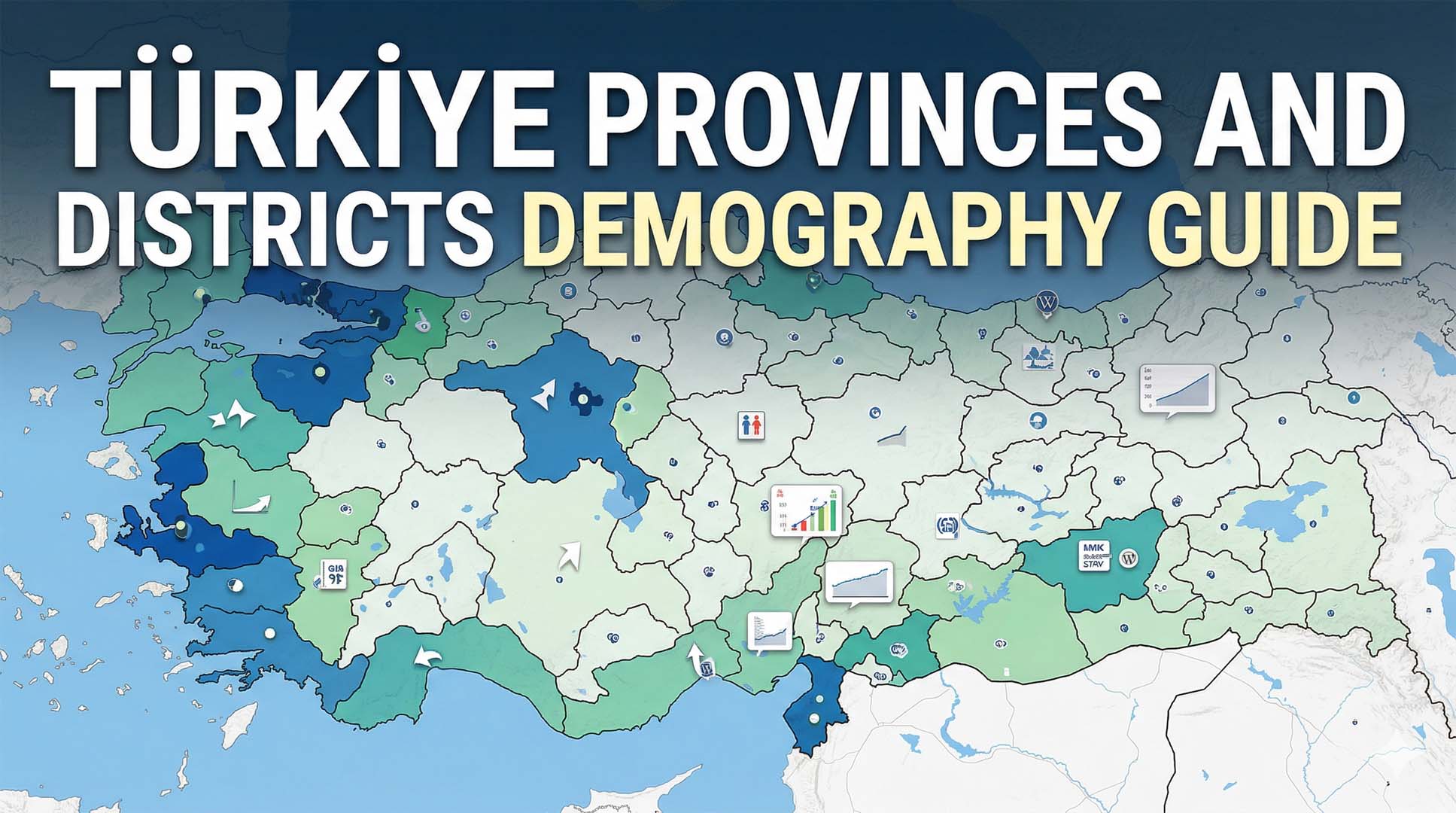
This is a professional digital atlas and analysis guide designed to provide data covering all units within the civil administrative structure of the Republic of Türkiye. Its primary goal is to deliver the administrative hierarchy, extending from provinces to the smallest villages and neighborhoods, to the user through a dynamic navigation panel, precise GIS locations, and Wikipedia links. Centered on the principles of “Zero Summarization” and “Absolute Protection,” it aims to convey data based on official sources (TURKSTAT, YSK, Ministry of Interior) through an interactive dialogue without any clipping or reduction.
What Is Being Attempted With This Gem? (Goals)
This designed AI assistant attempts to perform a multi-layered data analysis through its 11-section rule set:
- Smart Context and Conflict Management: It maintains the hierarchical context by remembering which province or district the user is currently exploring. It has the capability to directly ask for the correct province when homonymous (same-named) villages or districts are queried. Furthermore, if data is missing, it clearly reports “no data found” instead of fabricating information.
- Macro Province Report (Phase 1): In province-level queries, it presents demographic data, surface area, mayors, and political party distributions in tabular formats.
- Micro District Analysis (Phase 2): When descending to the district level, it creates a district identity card and, most importantly, lists all neighborhood and village names associated with that district alphabetically, one by one, following the “Zero Summarization” rule.
- Nano Settlement Analysis (Phase 3): When drilling down to the neighborhood or village detail, it reports population changes over the last 5 years, the rate of change, and demographic dependency ratios by age groups.
- Historical Trends and Standards: It presents data accompanied by visual icons (🏛️, 🏘️, 🌳, 🏠) and lists the “Top” attributes (most populous, highest altitude) within the province.
- Dynamic Navigation Panel: It acts as a map at the top of every response, showing the user’s current location (📍 Province > District > Neighborhood).
- Data Timestamp: It ensures that a definitive year stamp is applied to all statistics provided and source attribution is made.
- Precise GIS and Geographical Positioning: It provides the geographical centers (Centroid) of settlements in Degree, Minute, Second (DMS) format.
- Wikipedia Connection Protocol: It provides direct URLs to existing Wikipedia pages for the relevant civil administrative unit.
- Absolute Protection: It guarantees that the data dumps are performed without interruption.
- Dual-Layer Verification: It checks for contradictions between official data in the background and warns the user with a “Hesitation Notice” in case of uncertainties.
How Will This Gem Be Used? (User Guide)
- Input Standards: The user can start the process by directly entering a province, district, village, or neighborhood name into the system. There is no need for a special format or coding; simply writing the name of the place is sufficient.
- Expected Output: The system will generate tables, statistical texts, GIS coordinates, and direct Wikipedia links appropriate for the user’s hierarchical level (Macro, Micro, or Nano).
- Step-by-Step Operational Flow:
- Step 1: Type a province name (e.g., “Ankara”) into the search box. The system will present the macro report for that province.
- Step 2: After the report appears, simply type a district name (e.g., “Çankaya”). The system, understanding the context, will output the micro report for the Çankaya district of Ankara.
- Step 3: Type a neighborhood/village within that district. The nano panel will activate and provide a detailed analysis of that small settlement.
- Step 4: You can move back or forward in the navigation panel with simple commands like “Return to province” or “Go to previous level.”
- Limits and Constraints: The system cannot generate hypothetical or estimated data (e.g., what the population will be next year). It issues a warning if data is missing from official records. If it hits character limits during very long village lists, it does not leave the list incomplete but waits for approval to continue.
- Advanced Customization Rights: Users may add an “Optional Persona” to this Gem, requesting it to speak in a more academic, authoritative, or guide-like tone to personalize the system.
Detailed Usage Protocol And Dynamic Navigation
An “active state” algorithm has been developed for the efficient use of the system. This allows the user to perform deep analysis with short commands instead of complex sentences:
- Entry Methods: The user is not restricted to typing only the province name when entering the system. The process can also be initiated by entering the License Plate Number (e.g., “06” or “34”). The system automatically matches the plate code with the province name.
- Active State and Hierarchical Context: When a province is queried, that province enters the “Active State.” Any district name entered while the province is active is evaluated by the system as a unit belonging specifically to that province.
- District Activation: Once the district report is on the screen, the “District Active State” is engaged. From this point forward, questions asked, or searches for neighborhoods/villages, are conducted entirely within the boundaries of that active district.
- Instant Support Access: If a user experiences confusion at any stage or wishes to remember the system’s limits, they can directly request a “User Guide.” The system instantly provides the help text appropriate for the current level.
Gem URL: https://gemini.google.com/gem/14CQgceU-hfDqxBButTHLN-ufuyCzQCWE?usp=sharing
Dynamic Update Note: The Türkiye Provinces and Districts Demography Guide AI assistant is a dynamic structure that continuously evolves based on user feedback, updates to data sources, and system improvements. The features and guidelines in this article may be expanded or restructured through version updates over time.
| aydintiryaki.org | YouTube | Aydın Tiryaki’nin Yazıları ve Videoları │Articles and Videos by Aydın Tiryaki | Bilgi Merkezi│Knowledge Hub | ░ Virgülüne Dokunmadan │ Verbatim ░ | ░ Türkiye İller Ve İlçeler Demografi Rehberi │ Türkiye Provinces and Districts Demography Guide ░ 29.03.2026 | ░ GEM DAĞARCIĞI │ GEM LEXICON ░
A Note on Methods and Tools: The conceptual foundation and essence of this study belong entirely to the author. AI was used as a supporting resource in the research, data compilation, and intellectual interaction processes based on the author’s specific requests and guidance; it also provided technical writing assistance during the draft generation stage.
 Aydın Tiryaki