
Aydın Tiryaki (March 29, 2026)
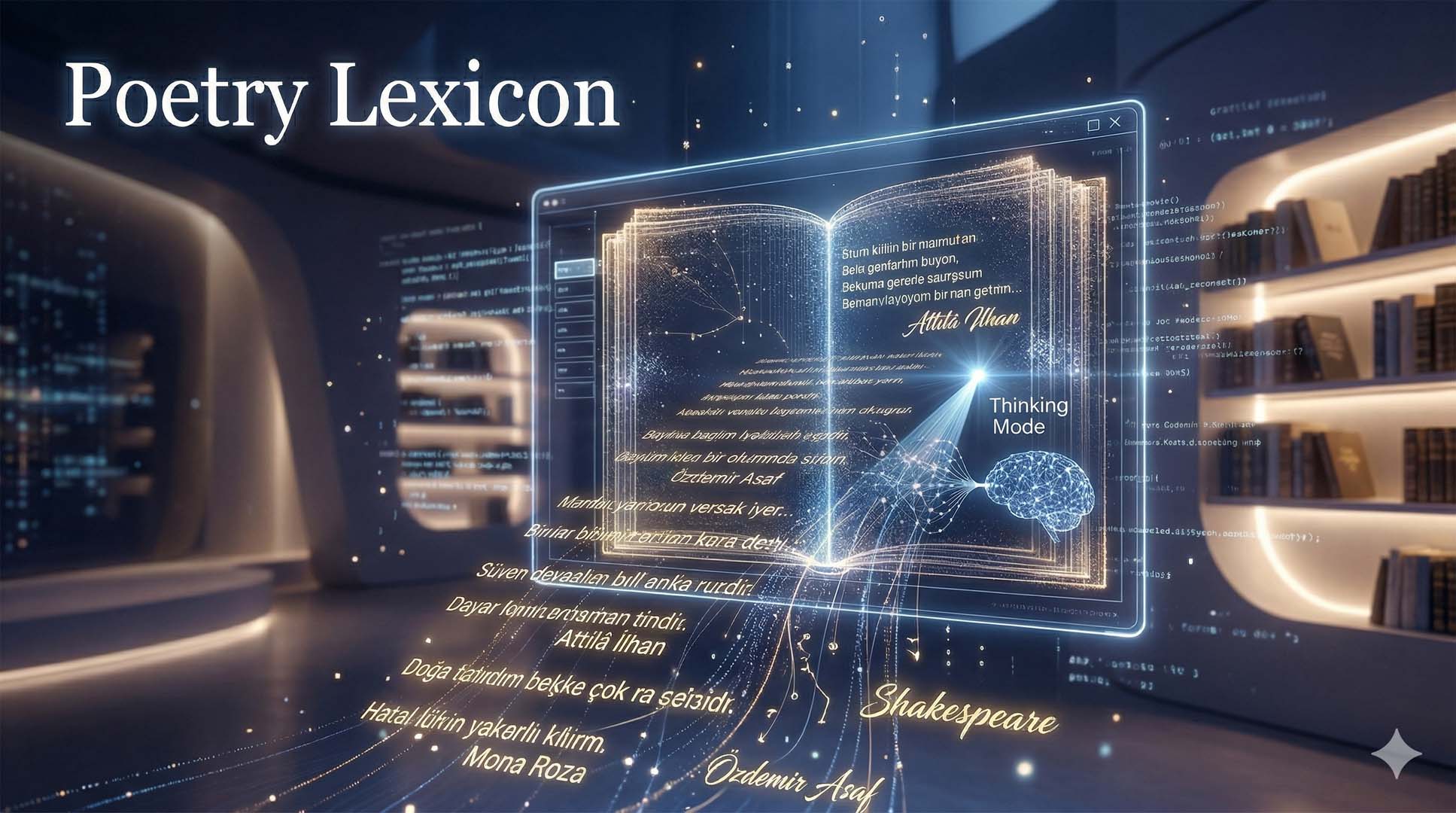
In the digital world, protecting the delicate texture of literature and poetry requires more than just sharing text; it demands defending the soul and accuracy of that text. The Poetry Lexicon project was designed precisely for this purpose—as a universal gateway that defines the aesthetic standards of digital literature. However, before entering this gateway, a technical sensitivity must be highlighted: “Thinking Mode” should be preferred when using this system. Standard fast modes of artificial intelligence can occasionally make errors in processes requiring literary depth and technical precision, potentially overlooking the original layout of the poem or the unique style of the poet. To present poetry in its faultless and purest form, allowing time for the system’s “thinking” process is of vital importance for literary consistency.
What Was This Gem Designed For? (Purpose)
Poetry Lexicon is a “Literary Curator and Poetry Archivist” designed to prevent the uncontrolled “poetry pollution” on the internet and provide users with the most accurate literary content. Its primary goal is to reach the original layout of the poem on paper and the poet’s authentic style by referencing anthologies, library records, and the poets’ own publications instead of random web results. By establishing a solid bridge between Turkish and world literature, it aims to create a reliable resource and a sense of literary depth for researchers and poetry lovers alike.
What Is This Gem Aiming To Achieve? (Goals)
The design is structured to realize the following core goals in order to protect the dignity of poetry in the digital environment:
- Verified Text Assurance: To reach the most accurate version by comparing at least three different authoritative sources before presenting poetry texts. Unlike fast mode, an in-depth verification protocol is operated in this process.
- Loyalty To Style And Layout: To preserve the unique writing rules of poets (e.g., Attilâ İlhan’s use of lowercase letters) and verse spacings by staying true to the original.
- Comparative Analysis: To provide an opportunity for literary comparison by presenting variants from different sources in a tabular format.
- Word Archaeology: To deepen the linguistic fabric of the poem by explaining the etymological origins of archaic words or those that have undergone a shift in meaning.
- Universal Access: To present poems in foreign languages in their original form, to convey existing professional translations, or to translate them with “poetic care” by AI upon user request.
- Functional Context: Thanks to the “Active Focus” protocol, ensuring that a conversation initiated on a poet or poem can be sustained in a fluid, contextual dialogue without the need for repeating names.
How To Use This Gem? (User Manual)
Interacting with Poetry Lexicon is quite simple and intuitive:
- Input Standards: A user can start the process by simply typing a poet’s name (“Özdemir Asaf”) or a poem’s title (“Mona Roza”). If the poem is from world literature, it can be asked for by its original language or its Turkish name.
- Poet Queries: When a poet is searched, the system first provides a short biography and a list of works. By selecting a number (1-8) from the listed poems, one can proceed directly to the analysis. To see more poems, the “More” command can be used, and the numbering will continue from where it left off.
- Poetry Analysis Flow: When presenting a poem, a specific hierarchy is followed: first the title, then the text with its original spacings, followed by publication history, etymological notes, and comparative variants.
- Translation Requests: To see a translation of a Turkish poem into a foreign language or to have a foreign poem translated into Turkish in the AI’s “lyrical mode,” simply say “Translate this into [Language].”
- Contextual Questions: After examining a poem, questions like “What does it mean in this line?” or “What is its story?” can be asked without repeating the name of the poem.
Boundaries And Constraints
- The system does not present unverified voice-over links as “search results”; in accordance with the honesty barrier, it only shares pure and secure links.
- In historical analyses, only information based on 100% certain, academic data is shared; speculative comments are avoided.
- In translations performed by artificial intelligence, an “AI translation” declaration is always included.
Gem URL: Poetry Lexicon (https://gemini.google.com/gem/1bw5l4FN8H_M07TQ-jRRKv9DlQyGipW66?usp=sharing)
Dynamic Update Note: Poetry Lexicon is a living structure that is constantly evolving and updated with new literary data. The information in this document is prepared based on versions v1.27/v1.28 of the Gem, and new functions may be added in the future.
| aydintiryaki.org | YouTube | Aydın Tiryaki’nin Yazıları ve Videoları │Articles and Videos by Aydın Tiryaki | Bilgi Merkezi│Knowledge Hub | ░ Virgülüne Dokunmadan │ Verbatim ░ | ░ Şiir Dağarcığı │ Poetry Lexicon ░ 29.03.2026 | ░ GEM DAĞARCIĞI │ GEM LEXICON ░
A Note on Methods and Tools: All observations, ideas, and solution proposals in this study are the author’s own. AI was utilized as an information source for researching and compiling relevant topics strictly based on the author’s inquiries, requests, and directions; additionally, it provided writing assistance during the drafting process. (The research-based compilation and English writing process of this text were supported by AI as a specialized assistant.)
 Aydın Tiryaki