
Aydın Tiryaki (December 08, 2008)
Since the 90s, a kerosene lamp has been hanging on the wall of the house in İnebolu. My father hung it there and even soot-stained the glass and the wall to make it look authentic. In reality, this kerosene lamp is connected to electricity, and where the wick should be, there is a light bulb that flickers as if it were a real flame.
The kerosene lamp left a profound mark on my childhood years. In the village where I lived until the age of 7, there was no electricity, and every room had a kerosene lamp. Since there was only one pressurized “Luxe” lamp in the house, it was used in only one room and only when there were guests.
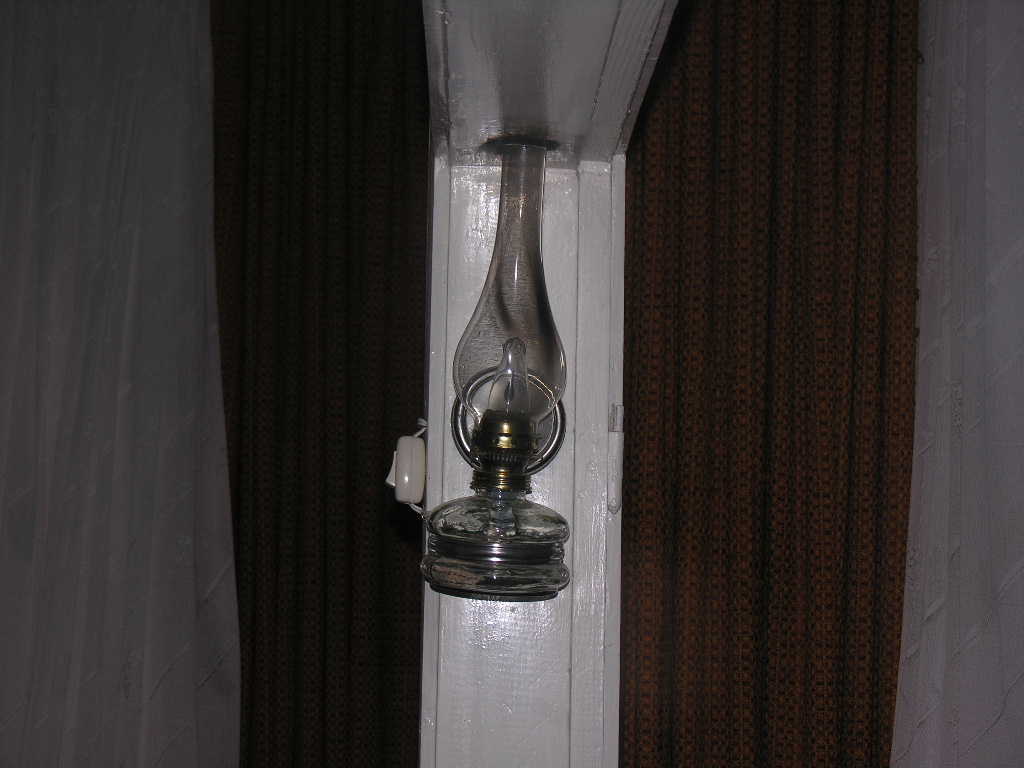
A kerosene lamp consists of a flat, bottle-shaped reservoir where the kerosene is kept. A long wick passes through a mechanism mounted on top of this reservoir, with one end submerged in the oil and the other protruding from the top. The wick is lit from there. On top, there is a glass chimney, also known as a lamp bottle. A metal reflector is attached to one side of the glass chimney.
How to light a kerosene lamp is important. If it is turned up too high, it creates soot on the glass or may even crack it. If it is kept too low, the lamp might go out.
It is hung on a nail in the wall using the wire attached to the metal reflector. Its height should be low enough for adults to reach but high enough to be out of children’s reach.
The nail in the wall had to be very sturdy because the kerosene lamp must never fall. The fall of a lamp with an active flame and a glass reservoir filled with fuel posed a serious fire hazard for our wooden houses in Türkiye.
Since the kerosene lamp did not provide much light, it would not be lit until it was fully dark. Anyone who had work outside would take the lamp from the wall and go with it if no other lamp was lit there. Everyone knew how to hold a kerosene lamp. We never had the luxury of minding brief moments of darkness in a room.
The years I am describing are the 60s, and the village is Yeşilöz (Ibras) in İnebolu. When we went to the center of İnebolu—which was always during the daytime—I never had the chance to experience electric light. During our visits to İnebolu, I would sit in my father’s tailor shop.
The İnebolu-Kastamonu road passed along the slope opposite the village. I could never quite figure out what the lights of the rare passing cars were like.
In my childhood, my primary light sources were kerosene lamps, occasionally the Luxe lamp, and the flashlight my grandfather made himself using a flat battery.
The kerosene lamp hanging as a joke on the wall of the house in İnebolu refreshes the memories of the early years of my life every time I see it.
Ankara, December 7, 2008
| aydintiryaki.org | YouTube | Aydın Tiryaki’nin Yazıları ve Videoları │Articles and Videos by Aydın Tiryaki | Bilgi Merkezi│Knowledge Hub | ░ Virgülüne Dokunmadan │ Verbatim ░ | ░ İnebolu’daki evin duvarında bir gaz lambası │ A Kerosene Lamp on the Wall of the House in İnebolu ░07.12.2008░22.02.2026░
A Note on Methods and Tools: The original Turkish version of this work was authored entirely by the author, without any assistance from artificial intelligence. (Note: AI was utilized solely as a translation and writing assistant to prepare this English version of the original text.) This text has been prepared within the scope of the “Verbatim” project for the purpose of transferring previously published articles to the present day.
 Aydın Tiryaki