
ODTÜ’de Mimar Mehmet Asatekin’in tasarladığı anıt.
Aydın Tiryaki (ChE’81)
ODTÜ’den Bir Köşe – ODTÜlüler Bülteni (Aralık 2004)
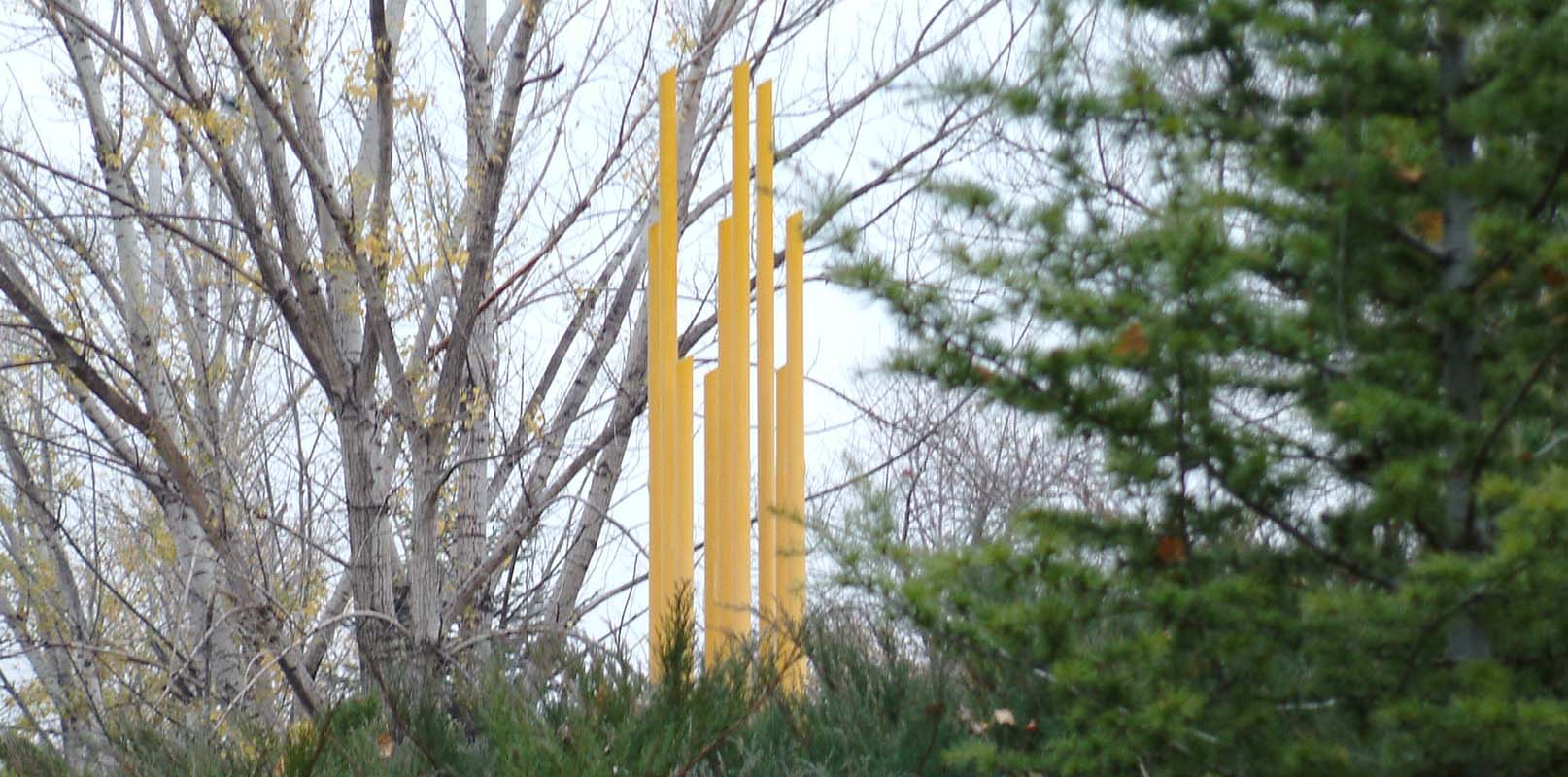
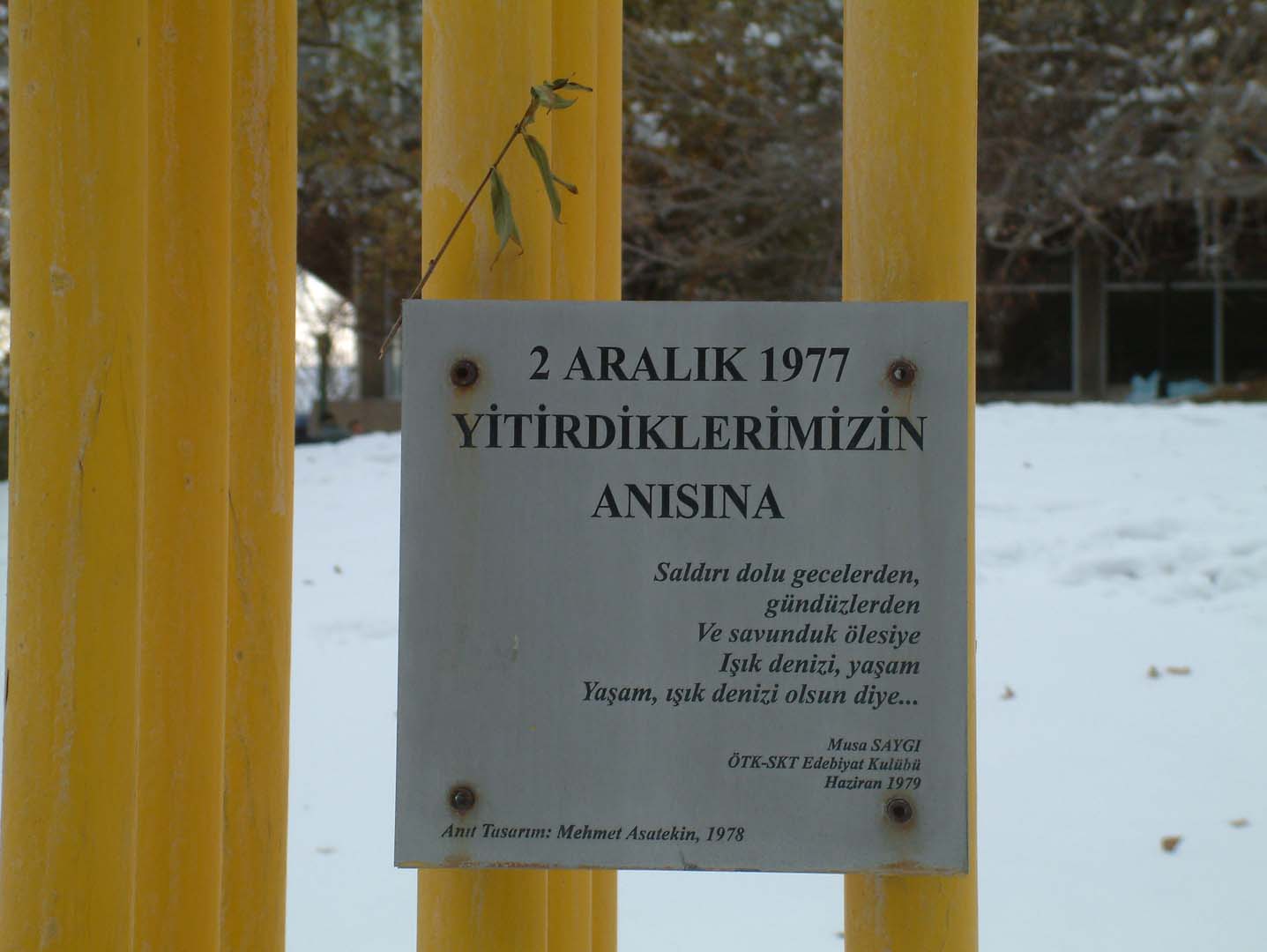
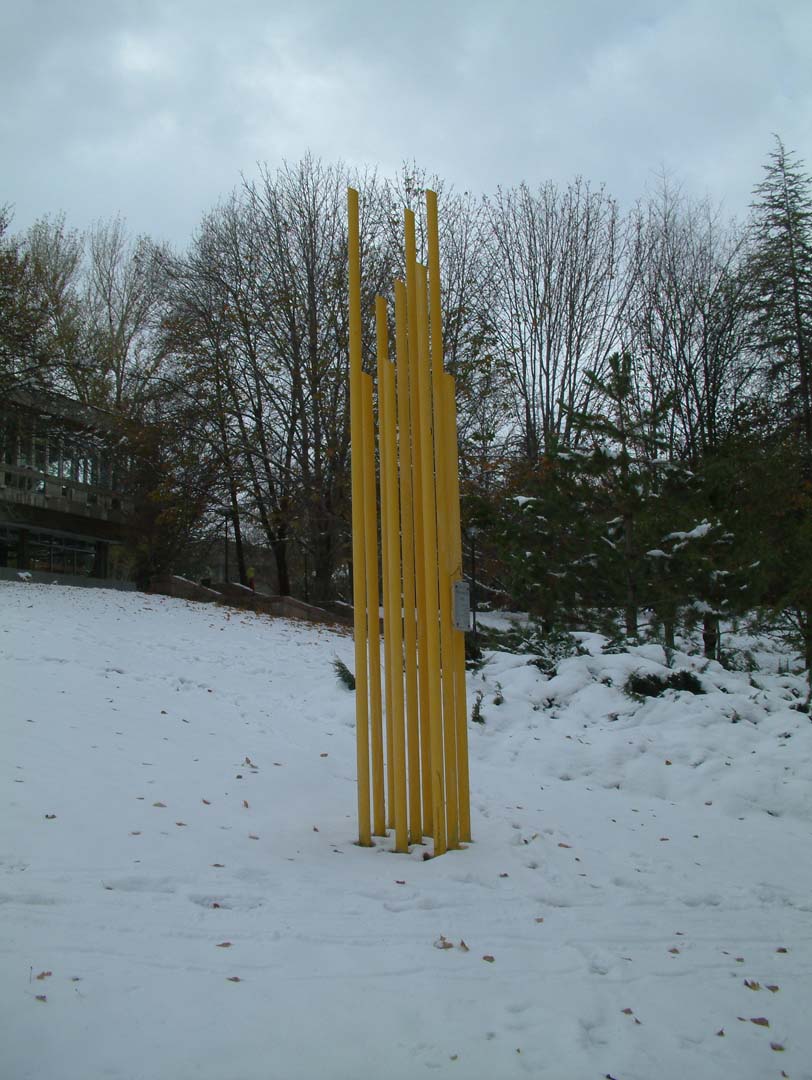
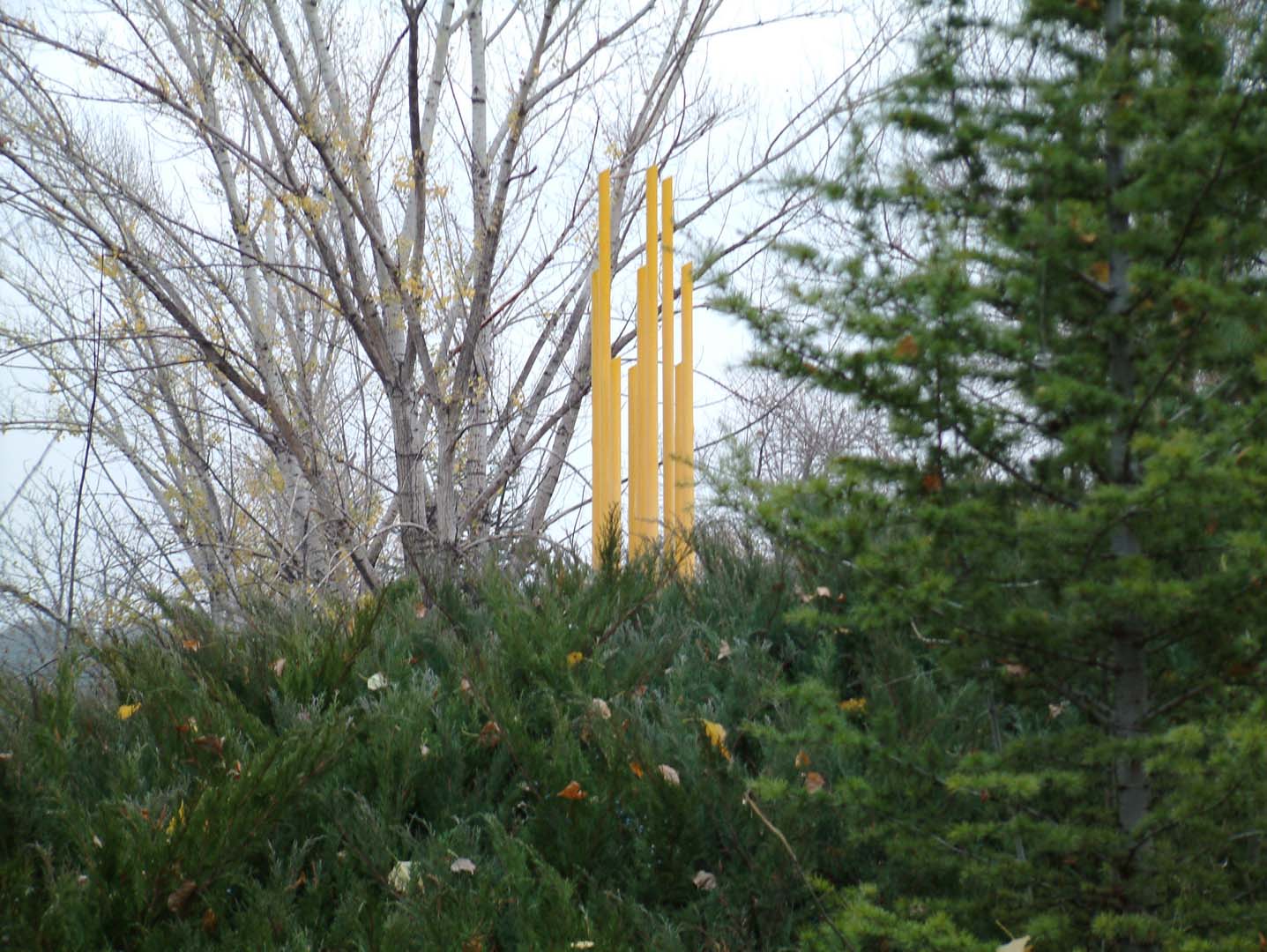
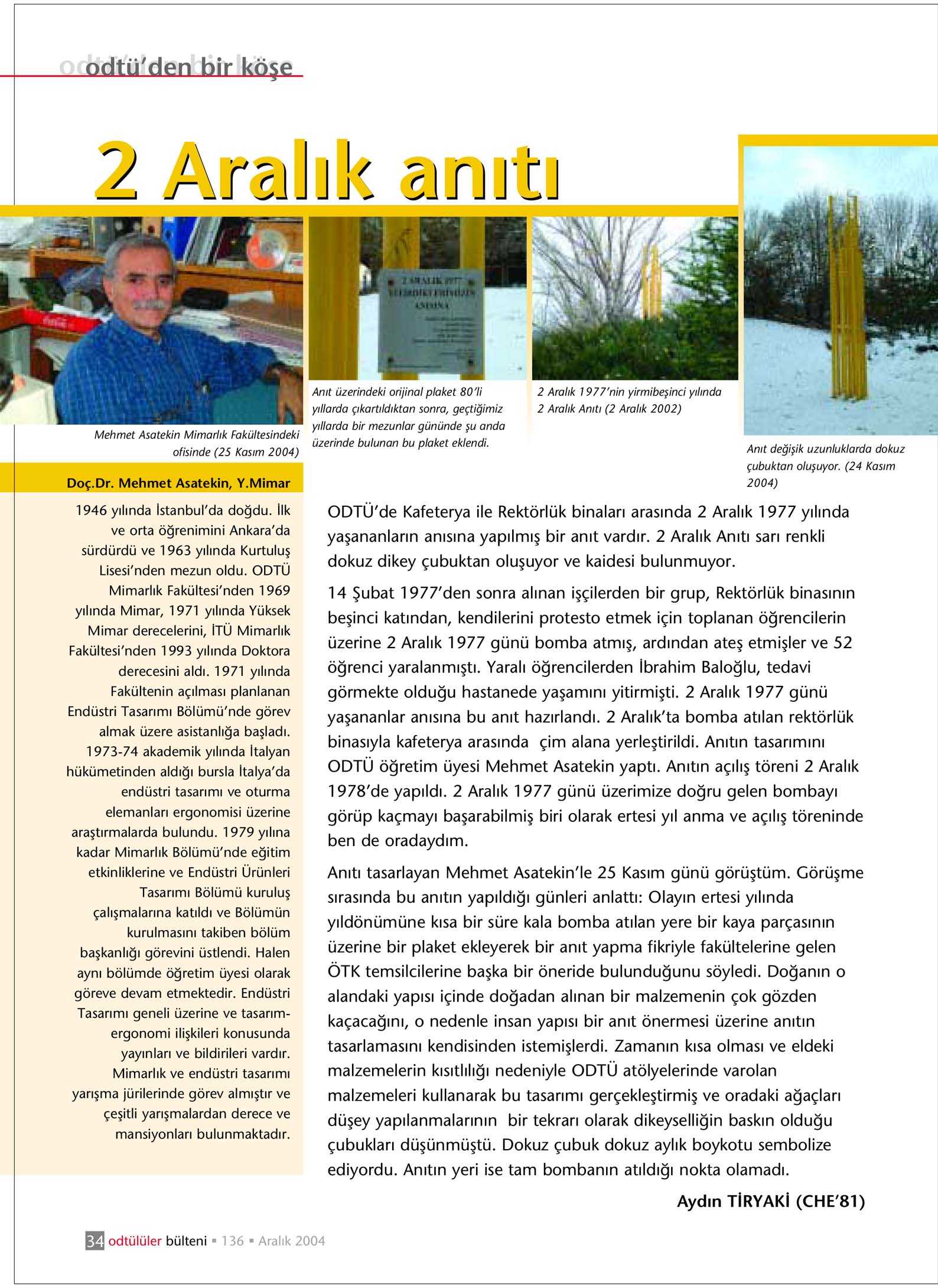
ODTÜ’de Kafeterya ile Rektörlük binaları arasında 2 Aralık 1977 yılında yaşananların anısına yapılmış bir anıt vardır. 2 Aralık Anıtı sarı renkli dokuz dikey çubuktan oluşuyor ve kaidesi bulunmuyor.
14 Şubat 1977’den sonra alınan işçilerden bir grup, Rektörlük binasının beşinci katından, kendilerini protesto etmek için toplanan öğrencilerin üzerine 2 Aralık 1977 günü bomba atmış, ardından ateş etmişler ve 52 öğrenci yaralanmıştı. Yaralı öğrencilerden İbrahim Baloğlu, tedavi görmekte olduğu hastanede yaşamını yitirmişti. 2 Aralık 1977 günü yaşananlar anısına bu anıt hazırlandı. 2 Aralık’ta bomba atılan rektörlük binasıyla kafeterya arasında çim alana yerleştirildi. Anıtın tasarımını ODTÜ öğretim üyesi Mehmet Asatekin yaptı. Anıtın açılış töreni 2 Aralık 1978’de yapıldı. 2 Aralık 1977 günü üzerimize doğru gelen bombayı görüp kaçmayı başarabilmiş biri olarak ertesi yıl anma ve açılış töreninde de oradaydım.
Anıtı tasarlayan Mehmet Asatekin’le 25 Kasım günü görüştüm. Görüşme sırasında bu anıtın yapıldığı günleri anlattı: Olayın ertesi yılında yıldönümüne kısa bir süre kala bomba atılan yere bir kaya parçasının üzerine bir plaket ekleyerek bir anıt yapma fikriyle fakültelerine gelen ÖTK temsilcilerine başka bir öneride bulunduğunu söyledi. Doğanın o alandaki yapısı içinde doğadan alınan bir malzemenin çok gözden kaçacağını, o nedenle insan yapısı bir anıt önermesi üzerine anıtın tasarlamasını kendisinden istemişlerdi. Zamanın kısa olması ve eldeki malzemelerin kısıtlılığı nedeniyle ODTÜ atölyelerinde varolan malzemeleri kullanarak bu tasarımı gerçekleştirmiş ve oradaki ağaçları düşey yapılanmalarının bir tekrarı olarak dikeyselliğin baskın olduğu çubukları düşünmüştü. Dokuz çubuk dokuz aylık boykotu sembolize ediyordu. Anıtın yeri ise tam bombanın atıldığı nokta olamadı.
Doç.Dr. Mehmet Asatekin, Y.Mimar
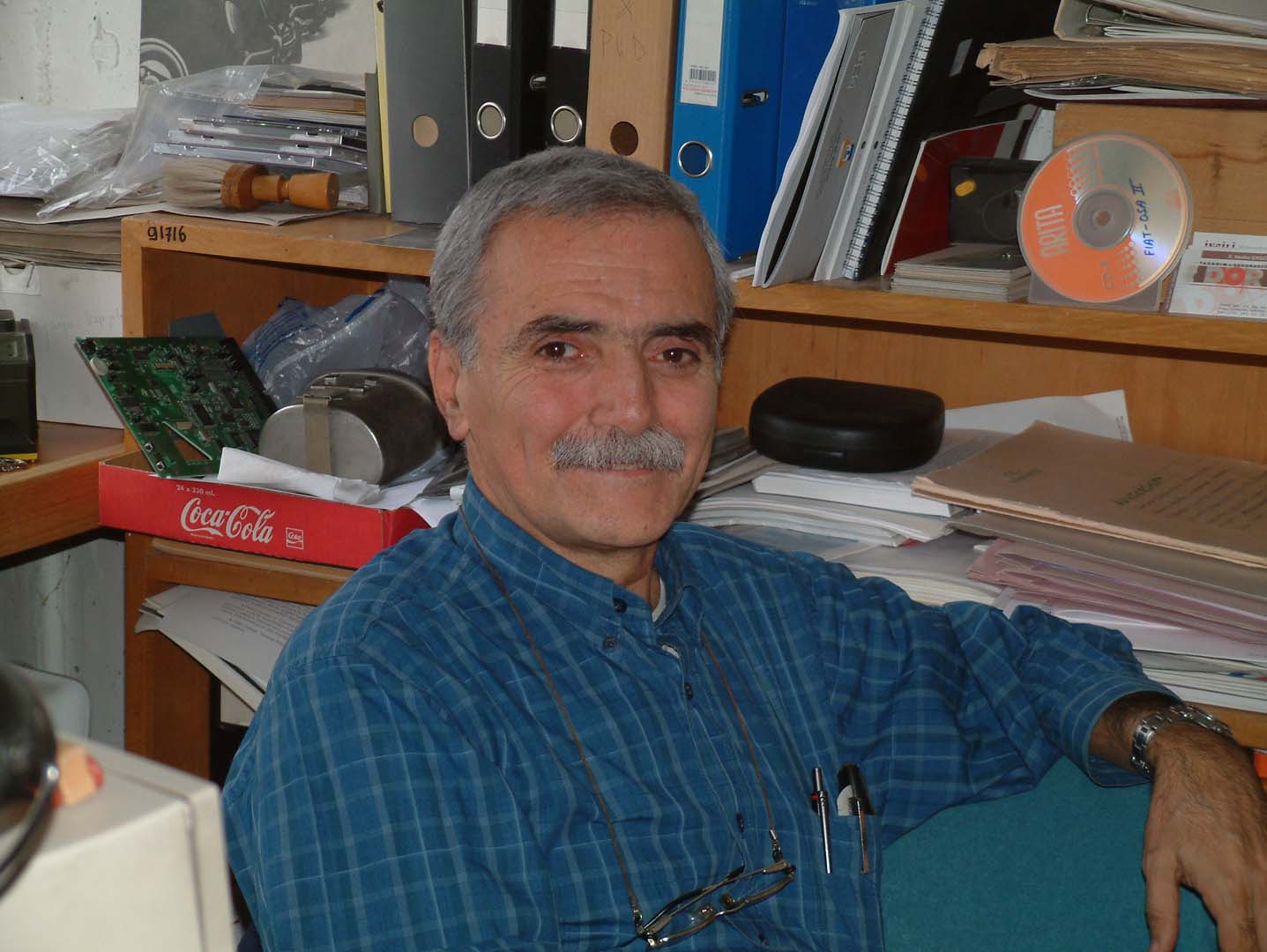
1946 yılında İstanbul’da doğdu. İlk ve orta öğrenimini Ankara’da sürdürdü ve 1963 yılında Kurtuluş Lisesi’nden mezun oldu. ODTÜ Mimarlık Fakültesi’nden 1969 yılında Mimar, 1971 yılında Yüksek Mimar derecelerini, İTÜ Mimarlık Fakültesi’nden 1993 yılında Doktora derecesini aldı. 1971 yılında Fakültenin açılması planlanan Endüstri Tasarımı Bölümü’nde görev almak üzere asistanlığa başladı. 1973-74 akademik yılında İtalyan hükümetinden aldığı bursla İtalya’da endüstri tasarımı ve oturma elemanları ergonomisi üzerine araştırmalarda bulundu. 1979 yılına kadar Mimarlık Bölümü’nde eğitim etkinliklerine ve Endüstri Ürünleri Tasarımı Bölümü kuruluş çalışmalarına katıldı ve Bölümün kurulmasını takiben bölüm başkanlığı görevini üstlendi. Halen aynı bölümde öğretim üyesi olarak göreve devam etmektedir. Endüstri Tasarımı geneli üzerine ve tasarım-ergonomi ilişkileri konusunda yayınları ve bildirileri vardır. Mimarlık ve endüstri tasarımı yarışma jürilerinde görev almıştır ve çeşitli yarışmalardan derece ve mansiyonları bulunmaktadır.
Yöntem ve Araçlar Üzerine Bir Not: Bu yazıdaki tüm gözlem ve fikirler bütünüyle yazara aittir. Metin, daha önce yayımlandığı dergiden buraya aktarılırken asıl içeriğine sadık kalınmıştır. Türkçe metnin oluşturulmasında hiçbir yapay zeka desteği alınmamıştır. Yalnızca İngilizce çeviri aşamasında metin düzenlenmiş ve yapay zeka (Gemini) aracılığıyla İngilizceye çevrilmiştir.
THE DECEMBER 2nd MONUMENT (2 ARALIK ANITI)
The monument designed by Architect Mehmet Asatekin at METU.
Aydın Tiryaki (ChE’81)
A Corner from METU – METU Alumni Bulletin (December 2004)
At METU, between the Cafeteria and the Rectorate buildings, there is a monument built in memory of the events that took place on December 2, 1977. The December 2nd Monument (2 Aralık Anıtı) consists of nine vertical yellow rods and has no base.
On December 2, 1977, a group of workers hired after February 14, 1977, threw a bomb from the fifth floor of the Rectorate building onto students who had gathered to protest them; they then opened fire, wounding 52 students. One of the injured students, İbrahim Baloğlu, passed away in the hospital where he was being treated. This monument was prepared in memory of the events of December 2, 1977, and was placed in the grassy area between the Rectorate building and the Cafeteria, where the bomb was thrown. The monument was designed by METU faculty member Mehmet Asatekin, and the opening ceremony was held on December 2, 1978. As someone who saw the bomb coming towards us on December 2, 1977, and managed to escape, I was also there for the commemoration and opening ceremony the following year.
I met with Mehmet Asatekin, the designer of the monument, on November 25. During our meeting, he described the days when the monument was built: In the year following the event, shortly before the anniversary, representatives of the Student Representative Board (ÖTK) came to the faculty with the idea of creating a monument by adding a plaque onto a rock at the spot where the bomb was thrown. Asatekin told them he had a different suggestion. Stating that a natural material would easily be overlooked within the natural structure of that area, he suggested a man-made monument, and they subsequently asked him to design it. Due to the limited time and resources available, he realized this design using materials present in the METU workshops. He conceived the rods, where verticality is dominant, as a repetition of the vertical formations of the trees in that area. The nine rods symbolized the nine-month boycott. The location of the monument, however, could not be the exact point where the bomb was thrown.
Assoc. Prof. Dr. Mehmet Asatekin, M.Arch.
He was born in Istanbul in 1946. He completed his primary and secondary education in Ankara and graduated from Kurtuluş High School in 1963. He received his Bachelor of Architecture degree in 1969 and his Master of Architecture degree in 1971 from the METU Faculty of Architecture, and his Doctoral degree from the ITU Faculty of Architecture in 1993. In 1971, he began working as an assistant to take part in the planned Department of Industrial Design. In the 1973-74 academic year, he conducted research on industrial design and the ergonomics of seating elements in Italy with a scholarship from the Italian government. Until 1979, he participated in educational activities in the Department of Architecture and the establishment of the Department of Industrial Design, taking on the role of department head following its establishment. He currently continues his duties as a faculty member in the same department. He has publications and presentations on general industrial design and the relationship between design and ergonomics. He has served on architecture and industrial design competition juries and has received various awards and honorable mentions.
Note on Methods and Tools: All observations and ideas in this article belong entirely to the author. The content remains faithful to the original text as published in its source magazine. No artificial intelligence support was used in the creation of the Turkish text. The text was edited only during the translation phase and was translated into English via artificial intelligence (Gemini).
 Aydın Tiryaki